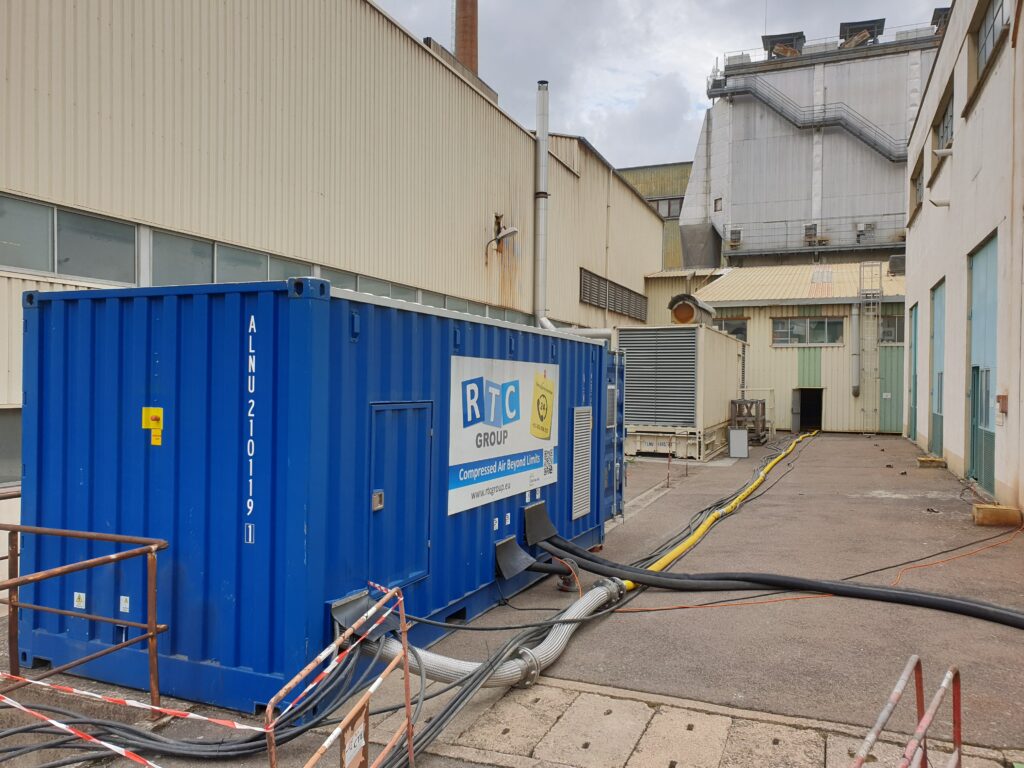
Steel and aluminium plants manage temporary compressed air needs by renting large-capacity oil-free compressors along with all supporting equipment, including air dryers, receivers, transformers, and distribution pipework. The compressed air delivered by these systems meets the ISO 8573-1 Class 0 air purity specification, which defines the highest level of air cleanliness in terms of oil content. These turnkey rental packages are engineered to match the exact flow and pressure demands of heavy metal production, and a specialist supplier handles delivery, installation, and start-up on site. The sections below unpack the key questions operations and maintenance teams typically face when planning or responding to a temporary compressed air requirement.
Why do steel and aluminium plants need oil-free compressed air?
Steel and aluminium plants need oil-free compressed air because oil contamination in process air can damage equipment, compromise product quality, and create serious safety risks in high-temperature metal production environments. In these facilities, compressed air comes into direct or indirect contact with molten metal, precision instrumentation, pneumatic controls, and cooling systems, where even trace oil carry-over is unacceptable.
In aluminium smelting, compressed air serves several distinct and critical functions. It is used for pneumatic conveying of alumina powder from storage to the reduction cells, for purging gas lines and instrumentation, and for process control throughout the potroom. Importantly, compressed air is also used to cool the electrolysis cells — known as pots — where aluminium is produced through the Hall-Héroult process. Maintaining adequate airflow to these pots is essential for temperature regulation and cell stability; any interruption or contamination of the air supply can disrupt the electrolytic process and risk costly cell damage. Any oil contamination in the air supply can interfere with process chemistry and damage downstream equipment throughout the smelter.
In steel production, compressed air drives cutting, forming, and surface treatment processes, including descaling, pneumatic actuation of valves and gates, and the operation of lance systems. Oil residue in the air supply can cause surface defects on finished steel, increase reject rates, and contaminate instrumentation that controls critical process parameters.
Beyond product quality, oil-contaminated air can degrade seals, valves, and sensors throughout a plant’s pneumatic network, leading to accelerated wear and unplanned failures. For this reason, air meeting the ISO 8573-1 Class 0 purity specification — which sets the most stringent limits on oil aerosol, oil vapour, and oil mist content — is the accepted standard for large metal production facilities. This is not simply a preference but an operational and quality requirement built into the plant’s design specification.
Need Reliable Oil-Free Compressed Air?
Our experts help you find the right compressed air rental solution for your industrial needs.
What causes unplanned compressed air outages in metal plants?
Unplanned compressed air outages in metal plants are most commonly caused by compressor mechanical failure, electrical supply faults, cooling system breakdowns, and maintenance backlogs on aging equipment. Because compressed air is a utility that feeds dozens of systems simultaneously, a single point of failure can bring an entire production line to a halt within minutes.
Heavy metal production places exceptional demands on compressor equipment. The combination of high ambient temperatures near furnaces, continuous duty cycles, vibration, and the sheer volume of air required puts machinery under sustained stress. Centrifugal and screw compressors operating at these duty levels are vulnerable to bearing wear, rotor fouling, and seal degradation, particularly when planned maintenance intervals are missed or deferred.
Cooling system failures are a particularly common trigger in metal plants. Oil-free centrifugal compressors depend on reliable cooling water circuits to maintain operating temperatures. If a cooling tower, chiller, or water supply system fails, the compressor will trip on high temperature before any other warning is apparent. Electrical supply disturbances, including voltage fluctuations and transformer faults, can also cause sudden shutdowns that are difficult to recover from quickly without standby capacity already in place.
Distribution system problems add another layer of risk. Pressure drop caused by undersized pipework, corroded fittings, or accumulated leaks across a large plant can reduce usable air pressure at the point of use even when the compressor itself is running correctly. Over time, these distribution losses compound until a process that once ran reliably begins to underperform.
How does temporary compressed air rental work for large metal facilities?
Temporary compressed air rental for large metal facilities works as a fully managed service in which a specialist supplier delivers, installs, and commissions a complete compressed air system on a short-term or medium-term basis. The rental package covers not just the compressor but every component the site needs to receive clean, dry, pressurised air at the required flow and quality.
The process typically begins with a technical assessment of the plant’s air demand, pressure requirements, available power supply, and site access constraints. For a steel or aluminium facility, this means calculating peak and average flow rates, confirming the electrical infrastructure available, and identifying where the temporary system will connect to the existing distribution network.
Once the specification is agreed, the supplier mobilises equipment from its rental fleet. A complete package for a large metal plant might include one or more high-capacity oil-free compressors, desiccant air dryers to achieve the required pressure dew point, large-volume air receivers to buffer demand peaks, power transformers where the site voltage does not match standard supply, and all interconnecting hoses, cables, and protection equipment. Supporting accessories such as pressure reducers and medium-voltage distribution equipment form part of the installation where the site demands it.
A real example of this approach in practice is a 22-week project at a stainless steel factory in Finland, where the RTC Group rental package included a 300 kW electric oil-free screw compressor delivering 43 cubic metres per minute, a 10,000-litre receiver, a refrigerant dryer, a 42-bar oil-free booster, and a 690-to-400 V transformer, with all cabling and distribution handled as part of the installation. Similarly, a four-month project at an aluminium smelter in Iceland involved two large electric oil-free compressors providing a combined 206 cubic metres per minute, paired with three desiccant dryers at minus 40 degrees Celsius pressure dew point and medium-voltage distribution equipment including an 11-to-6 kV transformer.
Throughout the rental period, RTC Group remains responsible for technical support. A single point of contact available around the clock means that if a problem arises at any hour, the right expertise is immediately accessible without the plant having to coordinate between multiple contractors.
What type of compressor is best suited for metal industry rental?
For metal industry rental, large-capacity oil-free centrifugal compressors are generally the best choice for high-volume continuous duty, while oil-free screw compressors offer flexibility across a wider range of flow requirements. The right selection depends on the specific flow rate, pressure, power supply, and duration of the rental.
Centrifugal compressors for high-volume continuous production
Oil-free centrifugal compressors are well suited to the sustained, high-volume air demands typical of steel mills and aluminium smelters. They deliver large flow rates efficiently over extended periods and produce air that is inherently free of oil contamination at the compression stage, with no lubrication present in the compression chamber. For metal plants requiring hundreds of cubic metres per minute continuously — such as an aluminium smelter supplying cooling air to potlines or a steel mill running continuous pneumatic descaling — centrifugal machines offer the capacity and reliability that the application demands.
Medium-voltage centrifugal compressors offer an additional advantage for large industrial sites. Rather than requiring a large temporary transformer to step voltage down to a standard low-voltage supply, these units connect directly to the plant’s existing medium-voltage network. This reduces the complexity and footprint of the temporary installation and can shorten commissioning time considerably.
Screw compressors for flexible or supplementary duty
Oil-free screw compressors cover a broad range of flow rates and are well suited to supplementary or backup roles, or to sites where the total air demand falls within their capacity range. They are available in air-cooled and water-cooled configurations, and their modular nature makes them straightforward to deploy quickly. For a metal plant that needs to supplement an existing system rather than replace it entirely, one or more screw compressors can be added to the distribution network with minimal disruption.
Where mains electricity is unavailable or unreliable, diesel-powered oil-free compressors provide an alternative that maintains Class 0 air purity without dependence on the grid. Hybrid units that start on diesel and switch to mains power when it becomes available are particularly useful during emergency response situations where the electrical supply has been disrupted alongside the compressor failure.
When should a metal plant arrange a temporary compressed air supply?
A metal plant should arrange a temporary compressed air supply as soon as a known risk to its primary compressed air system is identified, whether that is an impending planned shutdown, a compressor showing signs of failure, a capacity gap during expansion, or an actual outage already in progress. Acting early preserves options and reduces the risk of unplanned production loss.
The clearest trigger is a planned maintenance shutdown or overhaul. When a compressor or compressed air system is taken offline for scheduled work, a temporary rental unit keeps production running throughout the maintenance window. Planning this in advance allows the supplier to size the equipment correctly, arrange logistics, and have everything on site and commissioned before the primary system goes down. Rental terms can be structured to match the exact duration of the overhaul, whether that is a matter of weeks or several months.
A second important scenario involves the N+1 redundancy principle that most large metal plants build into their compressed air infrastructure. Under this arrangement, the installed compressor capacity includes one spare machine beyond what is needed to meet operational demand, so that if any single compressor fails, production continues without interruption. When that standby compressor itself fails or is taken out of service for maintenance, the plant loses its safety margin entirely. A temporary rental compressor can restore N+1 redundancy while the permanent standby unit is repaired or replaced, preventing a situation where a second compressor failure would immediately halt production.
Emergency situations demand a different response, but the same principle applies: the faster a temporary supply is arranged, the less production is lost. Metal plants that have identified their compressed air as a critical utility and established a relationship with RTC Group are better positioned to mobilise a solution quickly when an unplanned failure occurs. RTC Group maintains a large rental fleet and 24/7 availability to respond to emergency calls at any time, though lead times for delivery and installation will always depend on equipment availability and site access.
Capacity gaps during facility expansion or new equipment commissioning are a further scenario that is often underestimated. When a plant upgrades its production capacity — for example, bringing additional electrolysis pots online at an aluminium smelter or expanding a steel rolling line — the existing compressed air infrastructure may not keep pace with the increased demand until new permanent compressors are installed and commissioned. A temporary rental system bridges that gap and prevents the new production capacity from being constrained by insufficient air supply.
For operations teams evaluating their exposure, the practical question is whether a compressed air failure would halt production and at what cost per hour. If the answer points to significant financial or operational consequences, the case for pre-arranged temporary compressed air provision is straightforward. Oil-free compressor rental designed specifically for heavy industry covers all of these scenarios, from short emergency deployments to multi-month planned outage support, with the full installation managed by RTC Group from start to finish.
If you are assessing a specific requirement, speaking directly with an RTC Group compressed air specialist who understands metal production processes is the most reliable way to identify the right solution. Getting in touch with an expert early in the planning process gives the most flexibility and the best chance of a seamless transition when the primary system goes offline.