

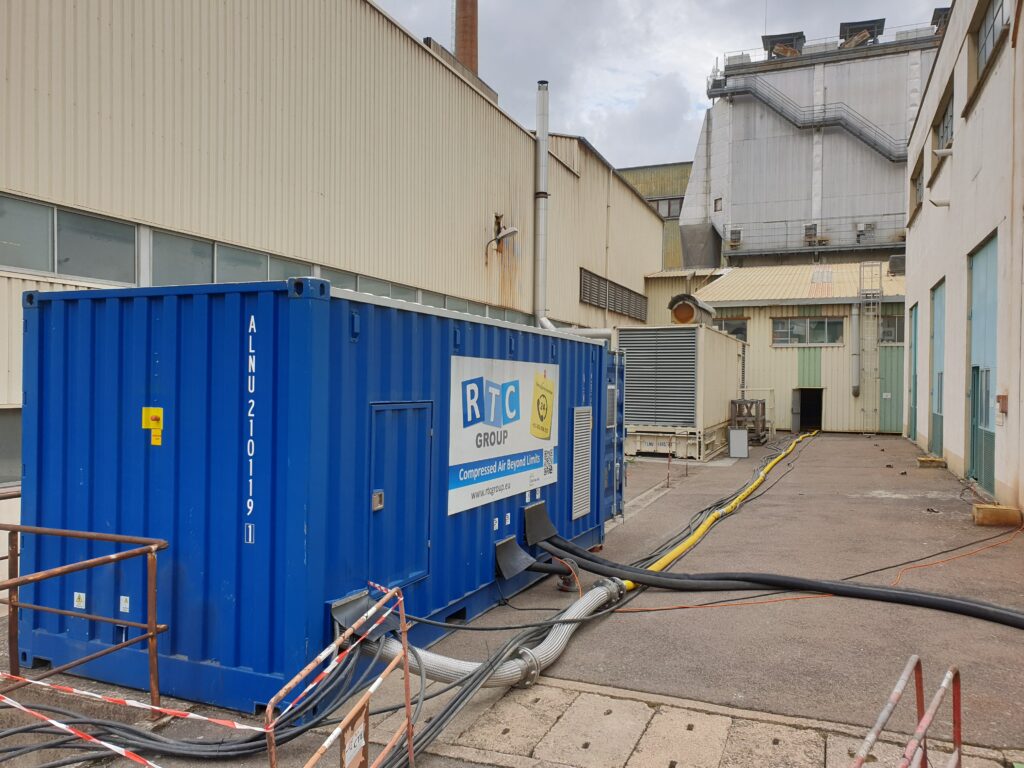
Yes, a diesel-powered oil-free compressor can deliver ISO Class 0 compressed air without any connection to the electrical grid. These units use compression technology that eliminates oil from the compression chamber entirely, so the absence of mains power has no bearing on air purity. For industrial facilities that need certified clean air in locations where grid power is unavailable, unreliable, or not yet connected, a diesel oil-free compressor is a fully viable solution. The sections below address the most common questions around how this works, when to use it, and which industries depend on it.
How does a diesel compressor produce 100% oil-free air?
A diesel oil-free compressor produces 100% oil-free air by using compression technology that never introduces oil into the compression chamber in the first place. The diesel engine provides the mechanical drive, but the compression element itself, whether a centrifugal stage, a dry screw, or a water-injected screw, operates without oil lubrication in the air path. Because oil is absent from the compression process, it cannot contaminate the compressed air output, regardless of the power source.
This is a fundamentally different design from an oil-injected compressor fitted with downstream filtration. In an oil-injected machine, oil is deliberately introduced to lubricate and seal the compression rotors, and filtration is then used to remove as much of it as possible before the air reaches the process. In a true oil-free design, there is no oil to remove. The diesel engine drives the compressor through a gearbox or direct coupling, and the compression stages use alternative sealing and cooling methods (such as water injection, Teflon-coated components, or precision-engineered clearances) to function without oil contact.
The result is that the air quality delivered by a diesel oil-free compressor is determined by the compressor’s design and the ancillary treatment equipment fitted downstream, not by whether the unit runs on diesel or mains electricity. Pairing the compressor with appropriate drying equipment (refrigerant or desiccant dryers depending on the dew point requirement) completes the air treatment train and ensures the output meets the required purity class.
Need Reliable Oil-Free Compressed Air?
Our experts help you find the right compressed air rental solution for your industrial needs.
What does ISO Class 0 mean for compressed air quality?
ISO Class 0 is the highest purity classification in the ISO 8573-1 standard for compressed air quality. It defines air in which oil content is so low that it falls below the detection limits of the measurement methods specified in the standard. In practical terms, ISO Class 0 air contains no measurable oil (neither as liquid, aerosol, nor vapour), making it the appropriate specification for processes where even trace oil contamination would cause product damage, regulatory failure, or equipment harm.
It is important to understand what ISO Class 0 describes and what it does not. ISO 8573-1 is a technical classification standard for air purity: it characterises the quality of the compressed air being produced, not a certification held by a supplier or a piece of equipment. When a compressor is described as delivering Class 0 air, this means the equipment design and the conditions under which it operates are capable of producing air that meets that purity threshold. Verifying this requires appropriate measurement and documentation at the point of use.
Class 0 sits above Class 1 in the ISO 8573-1 hierarchy. Class 1 permits a small, defined concentration of oil aerosol; Class 0 permits none that is measurable by the standard’s methods. For industries such as pharmaceutical manufacturing, food and beverage production, and electronics assembly, where any oil contamination risks product integrity or regulatory compliance, Class 0 is the only acceptable specification. For processes where oil contact would be merely inconvenient rather than catastrophic, a lower class may suffice, but where contamination carries serious consequences, Class 0 is the baseline.
When should a facility use a diesel oil-free compressor instead of an electric one?
A facility should use a diesel oil-free compressor instead of an electric one when a suitable mains or medium-voltage power supply is unavailable, insufficient, or cannot be connected in time. This covers a wide range of real-world situations: remote construction or industrial sites without grid infrastructure, temporary installations where the electrical connection is delayed, emergency deployments where speed of mobilisation is more important than long-term running cost, and outdoor or field operations where cabling a power supply would be impractical or prohibitively expensive.
Beyond pure off-grid scenarios, diesel oil-free compressors are also the right choice when the electrical infrastructure at a site cannot support the additional load of a large temporary compressor. Connecting a high-capacity electric compressor to an existing installation requires careful assessment of available capacity, transformer sizing, and protection coordination. Where that engineering work cannot be completed quickly enough, or where the site simply lacks the spare electrical headroom, a diesel unit can be positioned and commissioned far faster.
For planned shutdowns and maintenance outages, the calculus shifts slightly. If a facility has adequate electrical infrastructure and time to prepare, an electric oil-free compressor will typically offer lower operating costs over the rental period, since diesel fuel adds a continuous running cost that electricity does not. However, when the shutdown is urgent or the site is remote, the diesel unit’s independence from the grid makes it the more practical and faster option.
A hybrid oil-free compressor offers a middle path for situations where grid power will eventually become available. This type of unit starts on diesel power and switches seamlessly to mains electricity once a connection is established, avoiding the need to choose between the two. RTC Group operates diesel and hybrid oil-free compressors as part of its rental fleet, specifically for sites where power access is delayed or uncertain.
What industries rely on off-grid Class 0 compressed air?
Several industries routinely require Class 0 compressed air in locations or circumstances where grid power cannot be guaranteed. The most common are those where both air purity and operational flexibility are non-negotiable, including food and beverage, pharmaceutical, chemical, metal processing, and PET bottle manufacturing. In each case, the compressed air comes into direct or indirect contact with the product or process, making oil contamination unacceptable regardless of where the compressor is sited.
In the food and beverage sector, compressed air is used for conveying ingredients, operating pneumatic valves, packaging, and in some cases direct product contact. Oil in the air stream can contaminate batches, trigger regulatory action, and damage brand reputation. The same logic applies in pharmaceutical production, where compressed air used in GMP-compliant processes must meet strict purity requirements and where any contamination event can result in product recalls or production halts.
The metal industry (particularly aluminium and steel production) uses large volumes of compressed air for instrumentation, process control, and cooling applications. Aluminium smelters, for example, use compressed air to cool electrolysis cells and to operate pneumatic control systems throughout the potroom. These are continuous, high-volume applications where both air quality and supply reliability are critical. When a primary compressor fails or requires overhaul, a diesel oil-free unit can be mobilised to maintain production continuity without waiting for electrical infrastructure to be extended or upgraded.
Chemical and petrochemical plants, glass manufacturers, and textile producers also rely on oil-free compressed air for instrument air, process air, and pneumatic systems. In many of these facilities, compressor stations are located in areas where temporary electrical connections are complex to arrange safely. A portable diesel oil-free compressor can be deployed quickly, positioned close to the point of use, and commissioned without the lead time associated with electrical work.
PET bottle blowing is another sector with a specific dependence on oil-free air. The high-pressure air used to blow PET preforms into bottles comes into direct contact with the interior of the bottle, meaning even trace oil contamination would compromise food safety standards. Whether the blowing plant is at a permanent facility or a temporary production site, the air quality requirement remains the same.
Can a diesel oil-free compressor serve as an emergency backup unit?
Yes, a diesel oil-free compressor is well suited to emergency backup duty. Its independence from the electrical grid means it can be mobilised and operational in situations where the primary compressed air supply has failed, the electrical supply has been disrupted, or the standby compressor within the existing installation is itself out of service. Because it requires no grid connection, it can be commissioned faster than an electric unit in many emergency scenarios.
In industrial compressed air systems, responsible plant design follows an N+1 principle: the installation includes at least one more compressor than the minimum needed to meet production demand, so that if one unit fails, the remaining machines can cover the load. When the standby compressor in that N+1 arrangement fails or is taken out for repair, the buffer disappears. The facility is then running without redundancy, meaning any further failure leads directly to a production stoppage. In this situation, a rental diesel oil-free compressor can restore the redundancy while the permanent standby unit is repaired, without requiring the plant to shut down or reduce output.
Emergency deployment of a diesel unit is also relevant when a compressor failure coincides with a period when electrical rental equipment cannot be connected quickly. Grid-connected temporary compressors require transformer sizing, cable runs, and protection coordination, work that takes time even when all parties move fast. A diesel oil-free compressor bypasses this entirely. It arrives on site, is positioned, connected to the air distribution system, and started. For a plant facing an unplanned stoppage, that speed difference is often the deciding factor.
RTC Group’s emergency response capability is built around exactly this need: providing a single point of contact available around the clock, with the logistics, installation expertise, and certified equipment to get a temporary compressed air supply running as quickly as possible. For facilities that cannot afford downtime, that combination of technical readiness and operational speed is what makes a diesel oil-free compressor a credible and practical emergency backup solution. If your facility needs to discuss a specific scenario, contact RTC Group directly to assess the right configuration for your site.