

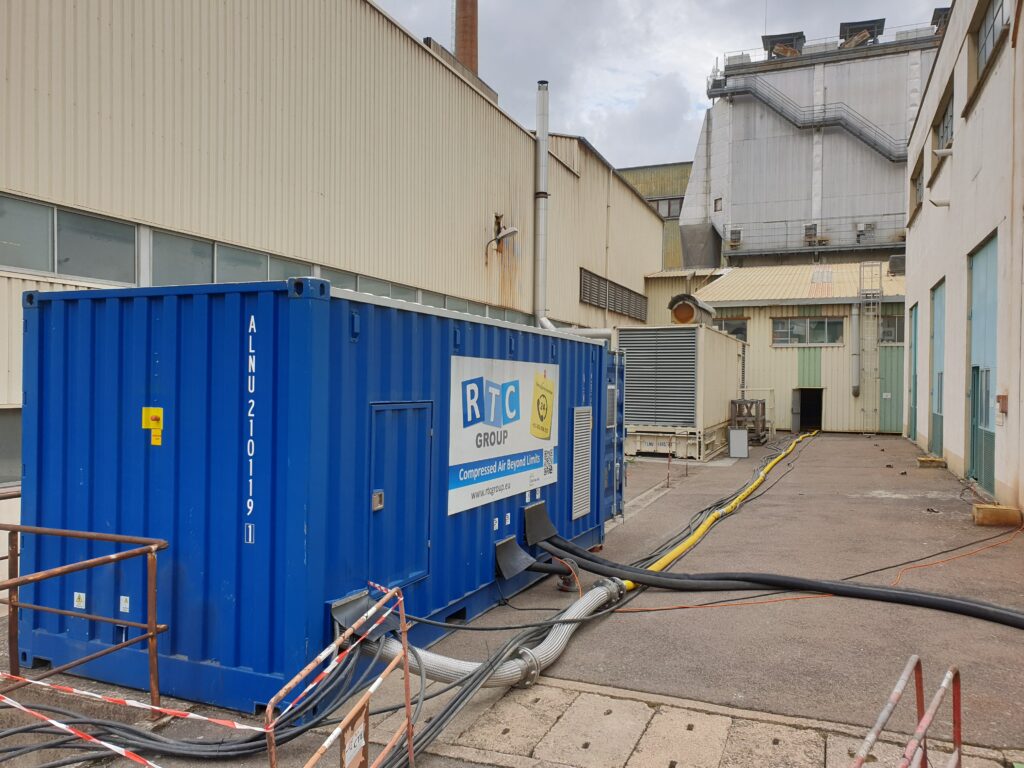
Industries that require compressed air meeting ISO 8573-1 Class 0 oil content specifications include food and beverage manufacturing, pharmaceutical production, electronics and semiconductor fabrication, PET bottle blowing, and chemical processing. Any sector where oil contamination in the compressed air stream would compromise product safety, process integrity, or regulatory compliance falls into this category. The sections below address the most common questions that procurement managers and maintenance engineers ask when evaluating their compressed air purity requirements.
Which production processes are most at risk from oil-contaminated air?
The production processes most at risk from oil-contaminated compressed air are those where air comes into direct or indirect contact with a product, a sensitive surface, or a controlled environment. Food and beverage lines, pharmaceutical filling and packaging operations, electronics assembly, and PET bottle blowing are the clearest examples because even trace oil aerosols can cause product spoilage, regulatory rejection, or equipment failure.
In food and beverage manufacturing, compressed air is used for conveying ingredients, operating pneumatic valves, and purging packaging lines. Any oil carryover at these contact points introduces a contamination risk that violates food safety standards and can trigger a product recall. The consequences extend beyond the immediate batch to brand reputation and supplier certification.
Pharmaceutical facilities face an equally uncompromising standard. Sterile air is required for GMP-compliant processes, and oil particles, even at sub-micron levels, can invalidate a cleanroom environment or a filling operation. Regulatory bodies treat compressed air as a raw material in these settings, which means its purity must be documented and auditable.
Electronics and semiconductor manufacturing is similarly sensitive. Oil films on component surfaces cause adhesion failures, short circuits, and yield losses that are difficult to trace back to their source. PET bottle blowing adds another dimension: high-pressure air is blown directly into the bottle preform, so any oil present ends up inside the finished container that will hold a consumable product.
Need Reliable Oil-Free Compressed Air?
Our experts help you find the right compressed air rental solution for your industrial needs.
What does ISO 8573-1 Class 0 actually mean?
ISO 8573-1 Class 0 is the most stringent purity designation in the ISO 8573-1 compressed air quality standard. It defines a requirement for the compressed air itself: the total oil content, covering liquid oil, oil aerosol, and oil vapour, must be lower than the limits defined in Class 1, the next tier. Class 0 is therefore a specification that describes air quality, not a certification that a compressor manufacturer or rental supplier automatically holds by virtue of supplying equipment. In practice, this designation is applied where even the smallest measurable oil contamination is unacceptable.
It is important to understand what Class 0 does and does not cover. The standard addresses oil contamination specifically. It sits alongside separate classifications for particulate matter and water content, which are governed by their own class designations within the same standard. A compressor or system delivering air that meets the Class 0 oil content specification still requires appropriate filtration and drying equipment to satisfy the particulate and moisture classes relevant to a given application.
There is also a meaningful distinction between oil-free compressed air and technically oil-free air. Oil-free compressed air is produced by compressors whose compression mechanism contains no lubricating oil at all: the air never contacts oil during the compression process. Technically oil-free air, by contrast, is produced by oil-lubricated compressors whose output is then treated by downstream filtration to reduce oil content to an acceptable level. Delivering air that genuinely meets Class 0 oil content requirements is properly associated with true oil-free compression technology, not with filtered output from oil-lubricated machines. When evaluating a supplier’s claim that delivered air meets Class 0 specifications, it is worth confirming which type of compression technology is actually in use and whether independent measurement data supports the claim.
Do heavy industries like steel and chemical plants need Class 0 air?
Yes, many heavy industrial processes require compressed air that meets ISO 8573-1 Class 0 oil content specifications, though the reasons differ from those in food or pharmaceutical settings. In steel production, large volumes of oil-free compressed air are used for process control, instrument air, and pneumatic conveying, where oil contamination would interfere with metallurgical outcomes or damage precision instrumentation. In aluminium smelting, compressed air plays a critical role in cooling the electrolysis cells, known as pots, that are central to the Hall-Héroult process. Maintaining consistent airflow to these cells is essential for process stability, and any oil contamination risks damaging the cell lining and disrupting the electrolytic reaction. Chemical and petrochemical plants have similar requirements for instrument air and process air in environments where oil could catalyse unwanted reactions or compromise safety systems.
The scale of demand in heavy industry adds a further dimension. A steel mill or aluminium smelter may require hundreds of cubic metres per minute of compressed air, and the equipment supplying that volume must be capable of sustaining the required air purity continuously under heavy load. This is not a context where standard industrial compressors are adequate.
Real-world projects illustrate the point. A 22-week project at a steel factory in Finland involved a 300 kW oil-free screw compressor, a 10,000-litre receiver, a refrigerant dryer, and an oil-free booster rated at 42 bar, a complete engineered package rather than a single machine. At an aluminium smelter in Iceland, two oil-free compressors delivered a combined 206 cubic metres per minute to support pot cooling and other process air demands, supported by medium-voltage distribution and three desiccant dryers providing air at a pressure dew point of minus 40 degrees Celsius. These installations reflect the complexity and scale that heavy industry demands from a Class 0 compressed air solution.
Gas separation plants, textile and fibre facilities, and waste treatment operations round out the broader industrial picture. A gas separation project in Belgium, for example, required a 250 kW oil-free compressor paired with a desiccant dryer at a dew point of minus 40 degrees Celsius because the purity of the separated gases depends directly on the purity of the inlet air.
When should a facility rent rather than buy a Class 0 compressor?
A facility should rent a Class 0 compressor rather than buy one when the need is time-limited, urgent, or uncertain in duration. The most common triggers are unplanned compressor failure, the loss of a standby unit within an N+1 redundancy arrangement, scheduled maintenance or overhaul of existing equipment, planned shutdowns, and temporary capacity gaps during expansion projects.
The N+1 principle is widely applied in critical compressed air installations: alongside the number of compressors needed to meet operational demand, one additional standby unit is kept available to cover any unplanned failure. When that standby compressor itself goes offline for repair or overhaul, the redundancy the system depends on disappears entirely. Renting a temporary unit to restore N+1 coverage is a practical and cost-effective way to maintain production continuity without committing capital to a permanent additional machine.
Rental also makes sense when the required specification is outside a facility’s normal operating range. A plant that usually runs at one capacity level may need significantly more air during a peak production period or a special project. Committing capital to a machine that will only be needed temporarily is difficult to justify, particularly when a rental solution can be mobilised, installed, and commissioned without the procurement and delivery timescales of a capital purchase.
Emergency situations place an additional premium on speed. When a compressor fails mid-production, the cost of downtime accumulates by the hour. A rental partner with a large, ready fleet and in-house logistics can mobilise a solution delivering air that meets the required purity specification far more quickly than any purchasing process allows. The ability to reach a single point of contact around the clock, covering equipment selection, delivery, installation, and start-up, removes the coordination burden from an already pressured operations team.
For facilities evaluating this decision, RTC Group provides short-term emergency rentals as well as multi-month and multi-year arrangements, with 24/7 support throughout the rental period. The flexibility to scale duration and specification to the actual need is a core advantage of the rental model over capital investment.
What equipment is needed alongside a Class 0 compressor for a complete installation?
A compressor delivering oil-free air alone does not constitute a complete compressed air installation. To deliver compressed air at the required purity, pressure, flow, and dryness at the point of use, a compressor must be paired with air treatment and distribution equipment sized and selected for the specific application.
Air drying equipment
Moisture in compressed air causes corrosion, process interference, and, in freezing environments, ice formation that can block or damage pipework. Two dryer types are commonly used alongside oil-free compressors. Refrigerant dryers cool the compressed air to condense and remove water vapour, making them suitable for general industrial applications where a moderate pressure dew point is sufficient. Desiccant dryers use an adsorbent material to achieve much lower dew points, typically down to minus 40 degrees Celsius, and are required wherever moisture-sensitive processes or outdoor pipework in cold climates are involved. The Iceland aluminium smelter project used three desiccant dryers in parallel to handle 200 cubic metres per minute at that dew point, a scale that underlines how critical dryer selection is at the system level, particularly where continuous pot cooling depends on uninterrupted dry air supply.
Pressure and distribution equipment
Air receivers act as buffers that stabilise system pressure and absorb demand peaks, reducing compressor cycling and protecting downstream equipment. High-pressure applications, such as PET bottle blowing, which requires air at pressures far above standard industrial levels, need dedicated oil-free boosters to step up from the compressor’s discharge pressure to the required process pressure. Distribution pipework, Camlock hoses, and associated fittings must be sized to avoid pressure drop that would undermine end-use performance.
Power supply infrastructure
Large oil-free compressors draw substantial electrical power, and temporary installations frequently require power supply infrastructure that a site’s existing low-voltage network cannot support. Transformers, either step-down units converting medium voltage to 400 V, or in some cases direct medium-voltage connections to the compressor, are a standard part of a complete temporary installation. Medium-voltage compressors, which connect directly to a site’s existing medium-voltage supply, can eliminate the need for a large temporary transformer entirely, simplifying the installation and reducing the footprint.
When a facility needs a complete temporary compressed air system rather than individual components, working with a specialist who manages the full scope, equipment selection, engineering, logistics, installation, and commissioning, is the practical approach. Details of the full equipment range available for temporary installations, including compressors, dryers, receivers, and transformers, give a clearer picture of what a turnkey solution can encompass.